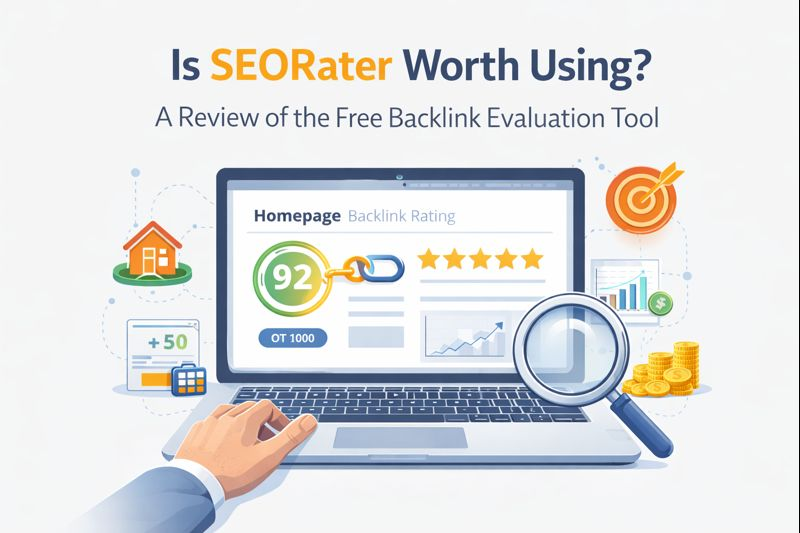
Homepage backlinks have always felt a bit like forbidden fruit in SEO. Everyone wants them, everyone talks about them, but very few people actually know how strong they really are. I’ve seen marketers overpay for homepage links that did nothing—and others quietly win rankings with a single well-placed one. That uncertainty is exactly why tools like SEO Rater exist, and why understanding homepage backlink value should be part of any serious SEO strategy 🍎
This guide is not theory. It’s a practical, step-by-step way to evaluate homepage backlinks, understand what makes them powerful (or dangerous), and use data instead of gut feeling when planning your link-building moves.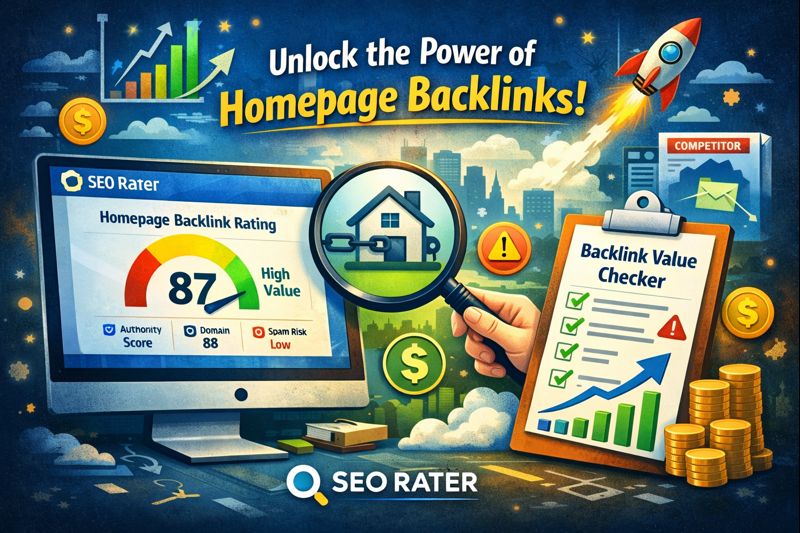
Why Homepage Backlinks Are a Different Beast
A homepage is not just another URL on a site. It’s the strongest page in most domains, the one that attracts the most links, traffic, and trust over time. When a backlink sits there, it often inherits a disproportionate amount of link equity compared to inner pages 🔗
But here’s the part most people miss: not every homepage backlink is valuable. A link on a bloated homepage with hundreds of outgoing links can be weaker than a contextual link on a clean, focused page. Position, quality, and overall site signals matter far more than the word “homepage” alone.
The Problem With Guessing Backlink Value
For years, SEOs have relied on proxies: Domain Authority, DR, traffic estimates, and instinct. Those metrics are useful, but they don’t answer one critical question—what is this backlink actually worth for my rankings? 🤔
That’s where a Backlink Value Checker becomes essential. Instead of looking at isolated numbers, it evaluates a homepage backlink using aggregated data from multiple SEO metrics and translates that complexity into a single, understandable rating.
Step 1: Identify the Exact Homepage Where the Link Will Live
Before running any analysis, get specific. You’re not evaluating a domain in general—you’re evaluating that homepage. Make sure you’re looking at:
- The real canonical homepage URL
- The desktop version (many homepages differ on mobile)
- The current state of outgoing links
Homepages change more often than people realize. A link that looked exclusive six months ago might now be buried among dozens of others 🧭
Step 2: Analyze the Homepage Backlink Rating
Once you plug the homepage into SEO Rater, the rating you receive is not a random score. It’s based on how leading SEO tools collectively evaluate that page’s authority, trust, and link equity 📊
This matters because it removes bias. You’re no longer cherry-picking metrics that support your decision—you’re looking at a consolidated signal that reflects real-world SEO impact.
Ask yourself:
- Is the rating strong enough to justify the cost?
- Does it outperform similar opportunities?
- Is it consistent with the site’s visible quality?
Step 3: Look Beyond Power—Check Risk Signals
A powerful homepage backlink can still be a bad idea. Risk is the silent killer in link building, and homepage links amplify both upside and downside ⚠️
When reviewing a homepage backlink rating, consider:
- Does the site link out aggressively to unrelated niches?
- Are there signs of paid-link patterns?
- Is the homepage cluttered with banners, widgets, or spammy elements?
SEO Rater helps flag suspicious patterns early, so you can avoid links that look strong on paper but carry long-term risk.
Step 4: Use Ratings to Spend Your Budget Smarter
Link building budgets disappear fast. Homepage backlinks are often the most expensive line item, which makes valuation even more critical 💸
With a clear homepage backlink rating:
- You can compare offers objectively
- You avoid overpaying for “brand name” sites with weak SEO value
- You can justify decisions to clients or stakeholders with data, not opinions
This alone can save thousands over a year—and often leads to better ranking gains with fewer links.
Step 5: Strengthen Negotiations With Real Numbers
Negotiation changes completely when you know the value of what you’re buying. Instead of accepting a flat price, you can point to the homepage backlink rating and negotiate based on actual SEO impact 🤝
In practice, this means:
- Pushing back on overpriced placements
- Asking for better positioning or longer duration
- Requesting additional exposure if the rating doesn’t justify the cost
Data turns conversations from sales talk into strategic discussions.
Step 6: Track Performance Over Time
A homepage backlink is not a one-time event. Its value can change as the site grows, declines, or alters its outbound links 📈
By periodically re-checking homepage backlink ratings, you can:
- See which links consistently support rankings
- Identify declining assets early
- Replicate successful patterns across other partnerships
This turns link building into a living system, not a static checklist.
Step 7: Use Homepage Backlinks for Competitive Advantage
Most competitors still chase links based on reputation or gut feeling. That’s an opening. When you understand homepage backlink value deeply, you start seeing opportunities others ignore 🧠
Sometimes the best homepage link isn’t from the loudest site—but from a quiet, well-maintained domain with clean signals and strong equity. Those are the links that move rankings without drawing unwanted attention.
Planning SEO Strategy With Confidence
SEO Rater’s homepage backlink rating works best when it’s part of a broader strategy, not a one-off check. Use it to:
- Map link acquisition priorities
- Balance power and safety
- Build authority steadily instead of gambling
The real win is confidence. You stop wondering whether a link will “help” and start knowing why it should.
Final Thoughts: Clarity Beats Hype Every Time
Homepage backlinks are powerful, but only when chosen with intent and understanding. Tools don’t replace experience—but they sharpen it. When you combine real data with human judgment, SEO stops being guesswork and starts becoming strategy 🚀
If you’re serious about building authority without burning budget or risking penalties, learning how to evaluate homepage backlink value is not optional anymore. It’s the difference between chasing links—and building rankings that last.