Most people in SEO eventually hit the same wall: backlinks are everywhere, metrics are everywhere, but confidence is rare. You can check ten tools and still not feel sure whether a link is actually worth anything. That uncertainty is usually where strategy starts to break down. 😐
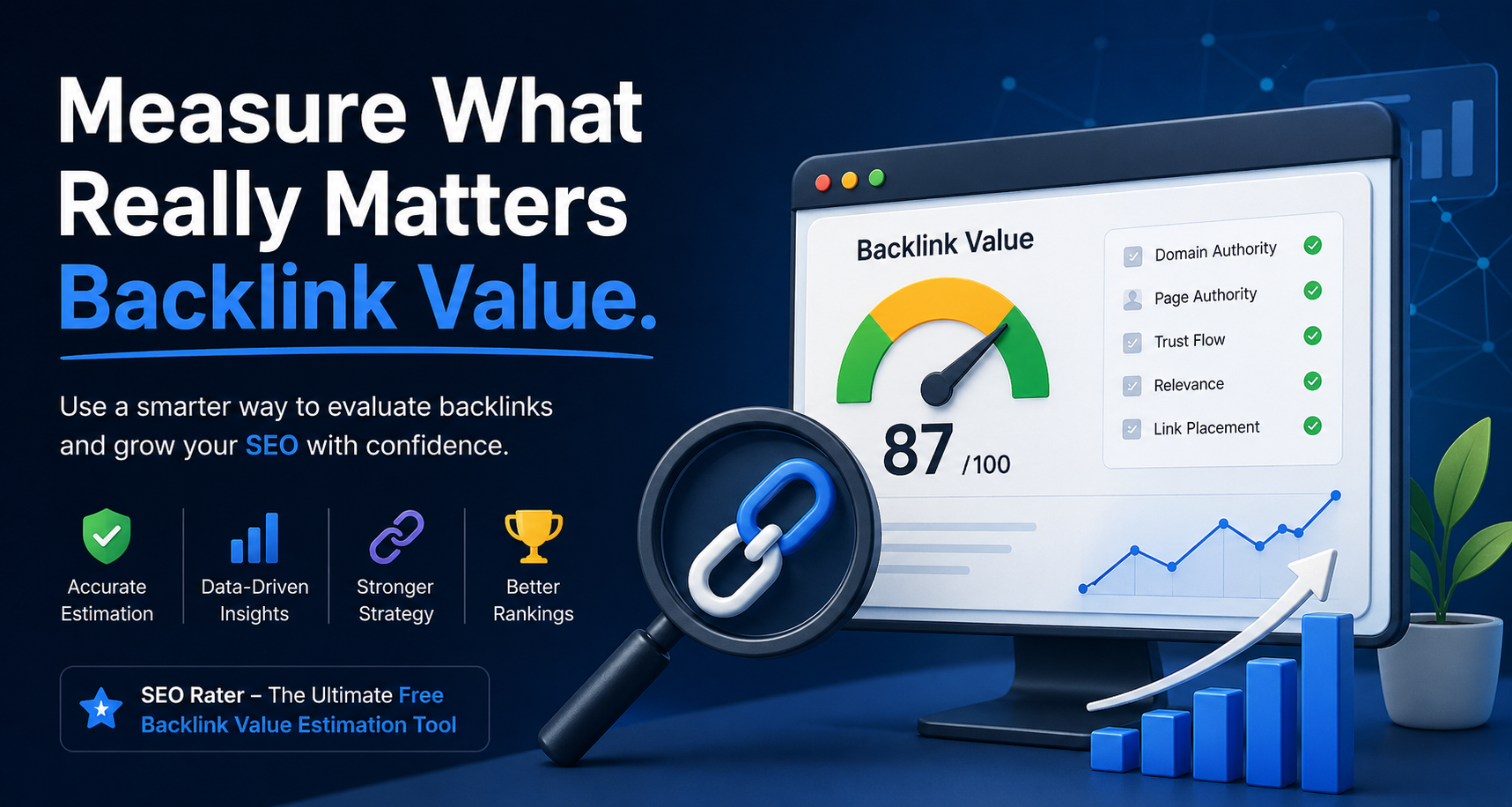
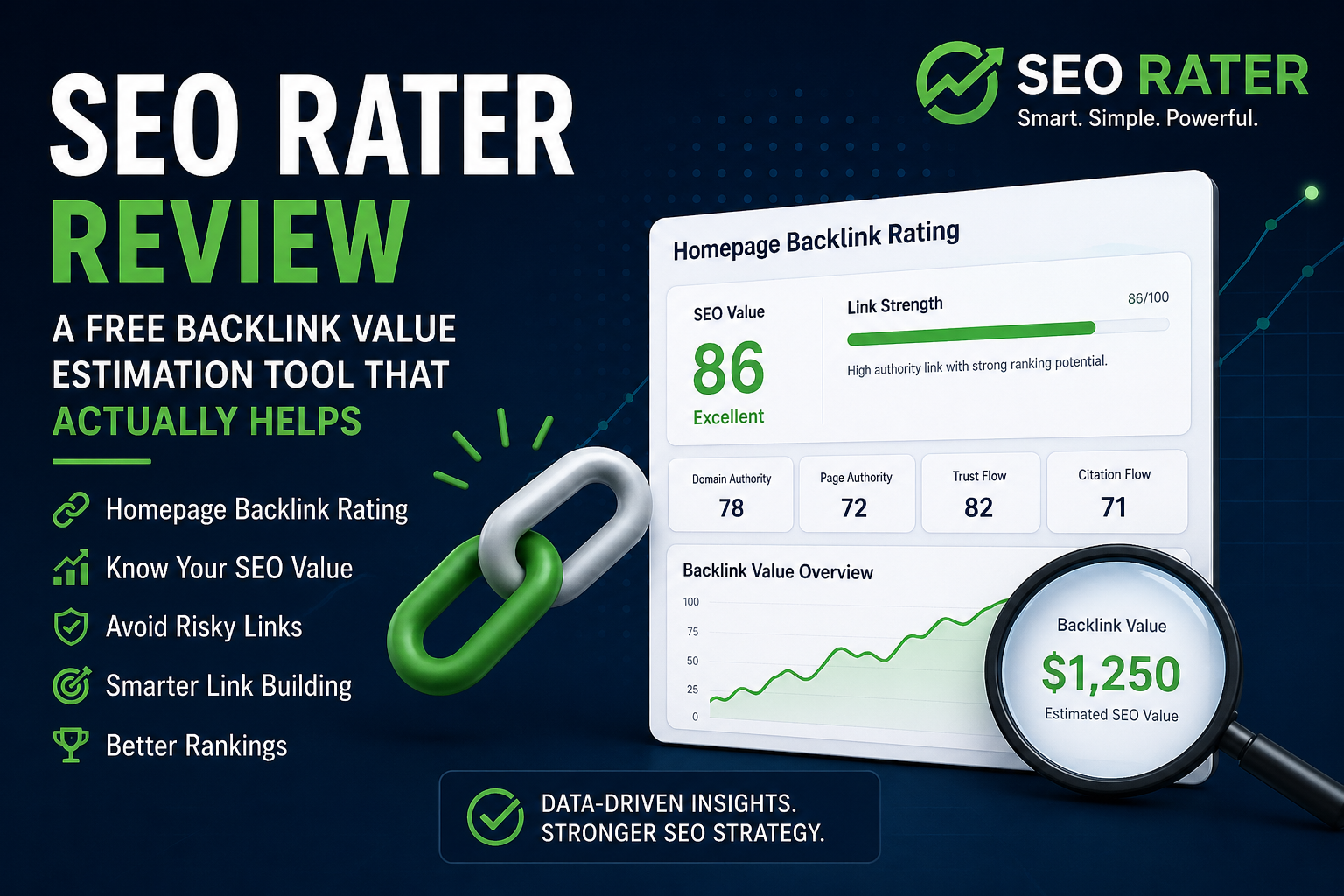
What really helps is having a simple way to translate messy data into something you can actually use. That’s where tools like the backlink value estimation tool start to make sense in practice. Instead of chasing isolated metrics, you get a more grounded view of how a link might behave in the real world.
But even with tools, the real challenge isn’t the numbers—it’s how you interpret them and decide what to do next.
Why homepage backlinks still matter more than people admit
Homepage backlinks have this quiet reputation in SEO: everyone knows they’re powerful, but not everyone knows why in a way that helps decision-making. A homepage usually carries the strongest internal authority of a domain, which means a link placed there tends to inherit more trust signals than deep-page placements. 🧭
This is also where tools like SEORater come into play. Instead of just assuming a homepage link is “good” or “bad,” you can actually ground that assumption in a structured evaluation process.
What makes homepage links interesting is not just raw authority, but how they influence the rest of the domain. One strong homepage link doesn’t just affect a page—it can lift multiple sections indirectly, which is why people still compete for them even in 2026.
But that doesn’t mean every homepage link is automatically valuable. In fact, that’s where most mistakes happen.
The part nobody explains: not all “strong” links are actually useful
A lot of SEO advice stops at “get high authority links,” but that’s only half the story. A homepage backlink can look impressive on paper and still do very little for your rankings if the site behind it is irrelevant or unstable.
One common issue is mismatched context. For example, a homepage link from a general blog with no topical alignment might pass authority, but not relevance. And relevance is often what decides whether rankings actually move or not. 🤔
Another overlooked factor is link placement. A homepage link buried in a footer or crowded sidebar behaves very differently from a naturally integrated editorial mention. The difference isn’t just cosmetic—it affects how search engines interpret intent and importance.
This is why relying on gut feeling or isolated metrics can be misleading. You need a way to combine signals instead of reacting to just one.
Turning backlink data into something you can actually use
The real value of any SEO tool isn’t in the numbers it produces, but in how those numbers change your decisions. If you can’t use the output to prioritize links, it’s just noise.
A good starting point is to classify backlinks into tiers instead of obsessing over exact scores. For example:
- Tier 1: High authority + relevant + stable domains
- Tier 2: Moderate authority but strong topical fit
- Tier 3: Weak or uncertain value links
This kind of grouping helps you stop overthinking every single metric and start seeing patterns instead. 📊
Once you do that, you can start asking better questions like:
- Is this link worth the cost or effort?
- Does it support long-term growth or just short-term spikes?
- Would I still want this link if rankings didn’t exist?
Those questions matter more than any single metric ever will.
Where most link-building strategies quietly fail
One of the biggest problems in link building is over-optimization too early. People start filtering opportunities based on strict rules before they even understand their own baseline performance.
Another issue is inconsistency. A site might have a few strong backlinks but no clear strategy behind why those links exist. That makes future decisions harder because there’s no pattern to replicate. 😬
And then there’s the risk factor nobody likes to talk about. Not every strong-looking backlink is safe long-term. Some domains lose credibility over time, change direction, or get deindexed patterns that weren’t visible at the time of acquisition.
If you’re not tracking link performance over time, you’re basically guessing whether your strategy is still working.
A more grounded way to think about SEO decisions
Instead of treating backlinks as isolated wins, it helps to think in systems. Every link is part of a larger structure: authority flow, relevance clusters, and long-term trust signals.
When you start viewing SEO that way, your decisions become calmer. You stop chasing every opportunity and start choosing based on actual impact. 🧠
This is also where estimation tools become useful—not because they give perfect answers, but because they reduce emotional decision-making. You’re less likely to overvalue a flashy link and more likely to notice consistent patterns that actually move rankings.
Over time, this approach naturally improves your filtering ability. You start recognizing which links look good versus which links perform well.
A simple scenario that makes everything clearer
Imagine you have two backlink opportunities:
- One is a homepage link from a general business blog with high metrics but weak topical relevance.
- The other is a smaller niche site with moderate authority but extremely aligned content.
On paper, the first one looks better. But in practice, the second one often performs more consistently because relevance reinforces trust signals.
This is the kind of decision SEO tools should help you clarify—not complicate. ⚖️
And once you’ve seen enough of these comparisons, you start realizing something important: SEO isn’t about chasing the highest numbers. It’s about building a pattern of links that make sense together.
Final thoughts: consistency beats “perfect” links
If there’s one thing worth remembering, it’s that backlink strategy is rarely about finding one perfect link. It’s about building a system where each link supports the next.
Tools can help with that, but they don’t replace judgment. They just give you a clearer surface to think on. And when you combine that clarity with consistency, results tend to follow naturally over time. 📌