Most SEO tools try to do everything at once. Rankings, audits, keywords, competitor tracking, technical checks — the list keeps growing. But when you actually need to answer a simple question like “How valuable is this homepage backlink?”, things suddenly become unclear. That’s exactly the gap this tool tries to fill. Instead of overwhelming dashboards, the focus is placed on one specific decision: evaluating backlink strength in a clean, understandable way. 🔎
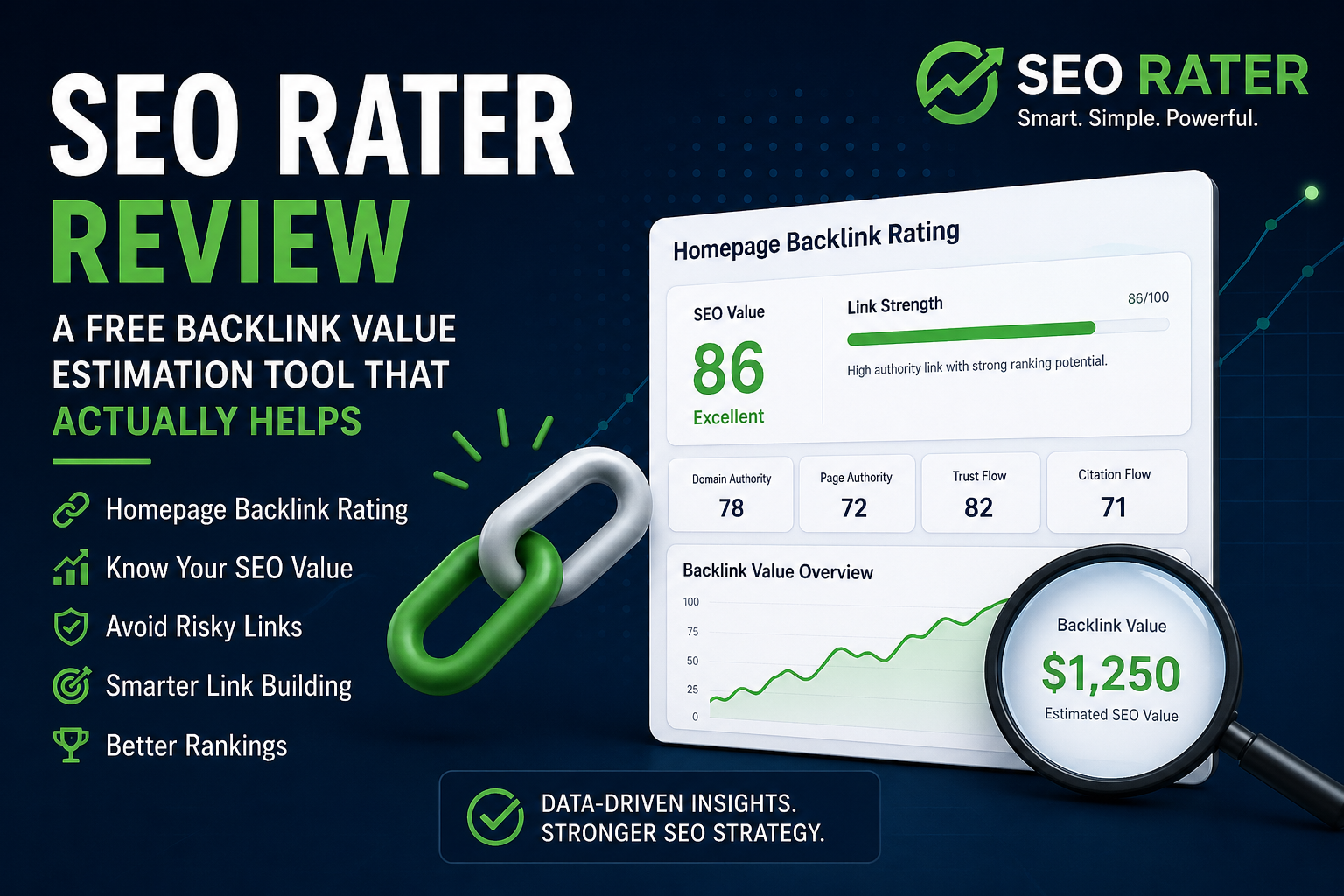
After spending some time testing the Homepage Backlink Rating tool, the main advantage becomes obvious — it simplifies something that’s usually overcomplicated. You’re not digging through dozens of disconnected metrics. Instead, the tool aggregates important signals into a single rating that helps you quickly judge whether a homepage link is worth pursuing. For anyone actively building links, this removes hesitation and speeds up decision-making significantly.

The broader ecosystem behind SEO Rater follows the same philosophy. It doesn’t try to replace full SEO suites. Instead, it acts as a focused layer designed for evaluating link value. This makes it particularly useful for agencies, freelancers, and site owners who already use multiple tools but still lack a clear method for comparing homepage backlink opportunities side by side. ⚖️
Why Homepage Backlinks Still Matter More Than Most Links
Homepage backlinks continue to carry unique weight in SEO, and that hasn’t really changed over the years. A link placed on a homepage typically benefits from stronger internal linking, higher authority distribution, and more frequent crawling. Because of that, even a single homepage placement can influence multiple pages across your site.
What often gets overlooked is how uneven these links actually are. Not every homepage backlink passes meaningful value. Some sit on cluttered layouts, some are buried below dozens of outbound links, and others come from sites with weak authority signals. Without a structured evaluation method, it’s easy to overpay or invest time in links that don’t deliver.
This is where a rating-based approach becomes practical. Instead of guessing based on domain reputation alone, you’re evaluating the specific page where your link would live. That nuance is important because homepage strength isn’t just about domain authority — it’s also about link placement, outbound competition, and overall structure. 📊
A Tool Built for Decision-Making, Not Just Data
One of the more interesting aspects of SEO Rater is how intentionally minimal it feels. The interface doesn’t push you toward complicated workflows. You input the page, review the rating, and move on. That simplicity makes it ideal for quick comparisons when you’re evaluating multiple link opportunities.
This also changes how you approach outreach. Instead of negotiating blindly, you now have a reference point. If two sites offer homepage placements, you can compare them objectively. That alone can prevent wasted budget and help prioritize stronger opportunities.
Another subtle benefit is consistency. When you evaluate links using the same scoring method, your strategy becomes more structured over time. You’re no longer relying on gut feeling or inconsistent metrics. You’re building a repeatable process, which is something many link builders struggle to maintain. 📈
The Value of Aggregated Metrics
Most SEO professionals already rely on several tools — each with its own scoring system. One might emphasize authority, another trust, another traffic signals. The challenge is that none of these metrics directly translate into backlink value on their own.
SEO Rater tries to bridge that gap by combining multiple signals into a single comparative rating. While no tool can perfectly predict SEO impact, this approach helps reduce noise. You’re not comparing apples to oranges anymore — you’re working with a unified measurement.
This becomes especially useful when analyzing mid-tier sites. High-authority domains are easy to evaluate. But when you’re choosing between dozens of moderate sites, the differences become harder to see. A consolidated rating helps highlight which opportunities are genuinely stronger. 🧩
Practical Benefits for Link Builders
Using a homepage backlink rating tool changes how you prioritize outreach. Instead of chasing every opportunity, you begin focusing on links that offer measurable value. That shift alone can improve efficiency significantly.
It also helps with budgeting. Paid homepage placements vary wildly in price, and without evaluation, it’s easy to overspend. Having a rating gives you leverage during negotiations and prevents investing in links that won’t move the needle.
Another advantage is risk reduction. Some homepage links may appear strong but come from sites with questionable patterns. A structured rating encourages closer inspection before committing. Over time, this helps maintain a healthier backlink profile. 🛡️
Performance Tracking Over Time
One overlooked aspect of link building is long-term evaluation. Many campaigns focus on acquiring links but rarely revisit them. By using a rating system, you can track whether higher-rated homepage links correlate with better performance.
This kind of feedback loop improves future decisions. If certain rating ranges consistently deliver results, you can refine your strategy around them. If not, you adjust. Either way, the process becomes data-informed rather than purely experimental.
This also helps scale campaigns. Agencies managing multiple clients need consistent evaluation standards. A simple rating framework allows teams to align decisions without lengthy discussions every time. ⚙️
Competitive Advantage Through Smarter Link Selection
Competition for strong homepage placements is intense. Many SEO campaigns target the same sites, often without fully understanding their value. When you evaluate links more precisely, you can spot overlooked opportunities.
This doesn’t always mean chasing the highest-rated pages. Sometimes the best strategy is finding balanced options — strong enough to matter, but not so competitive that they become expensive or difficult to secure.
Over time, this smarter selection process creates cumulative benefits. Instead of random link growth, you build a profile composed of carefully chosen homepage placements. That consistency can influence overall domain strength more predictably. 🚀
Ease of Use Matters More Than You Think
There’s a tendency in SEO to equate complexity with accuracy. But in practice, tools that are too complicated often go unused. One of SEO Rater’s strengths is that it’s fast enough to become part of daily workflow.
You don’t need training. You don’t need setup. You don’t need integrations. You just evaluate and move forward. That frictionless experience increases the likelihood that you’ll actually use it when making decisions.
For freelancers and smaller teams, this is especially helpful. Not everyone has time to analyze dozens of metrics manually. A quick rating makes the process manageable without sacrificing insight. 🎯
Final Thoughts
SEO Rater doesn’t try to be everything, and that’s exactly why it works. By focusing on homepage backlink value, it fills a very specific gap in the SEO workflow. The rating system simplifies comparisons, supports better budgeting, and reduces guesswork during outreach.
For anyone regularly evaluating homepage placements, the tool provides a practical advantage. It won’t replace full SEO platforms — but it doesn’t need to. Instead, it complements them by answering one of the most important questions in link building: Is this homepage backlink actually worth it?