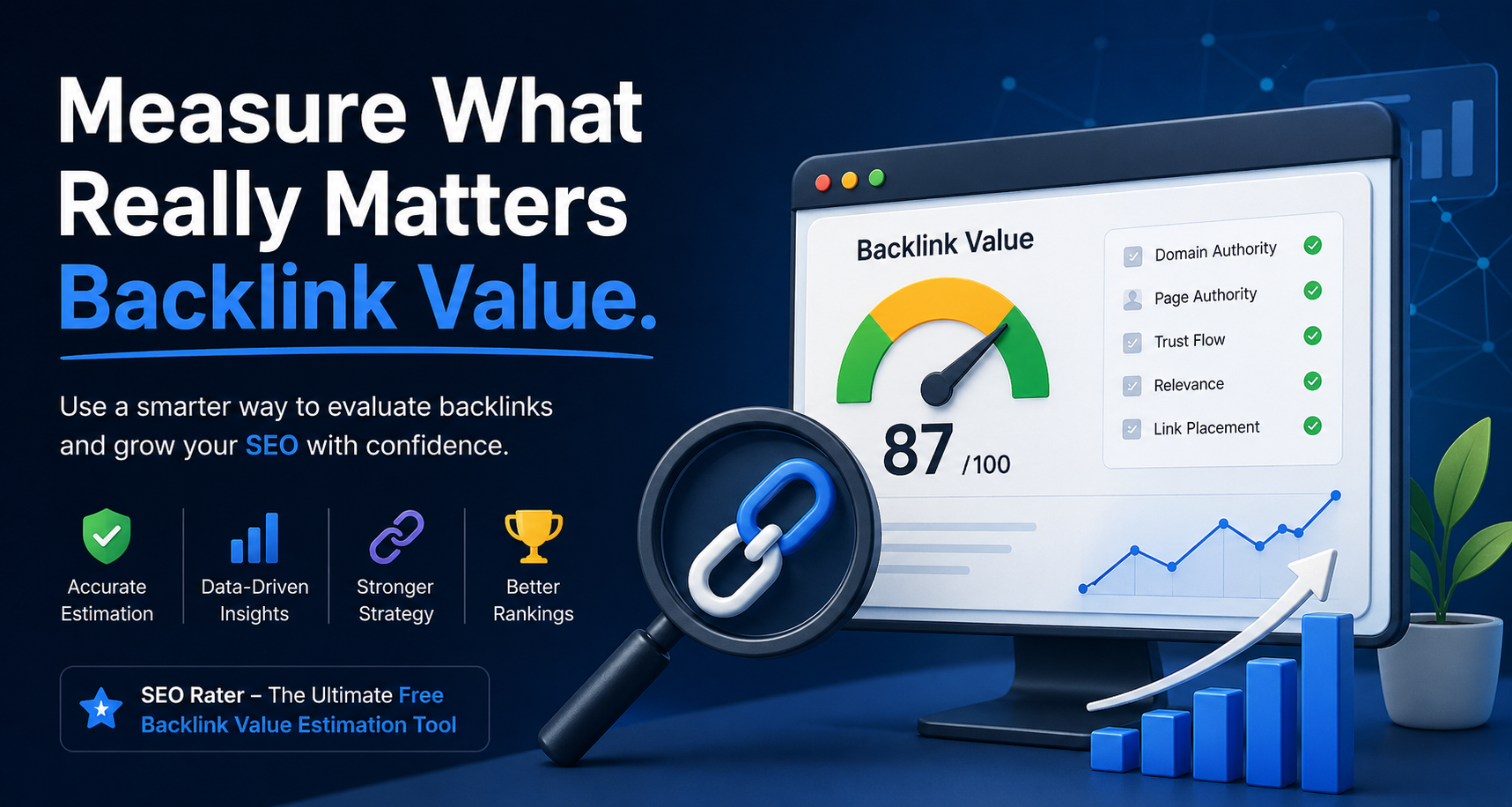
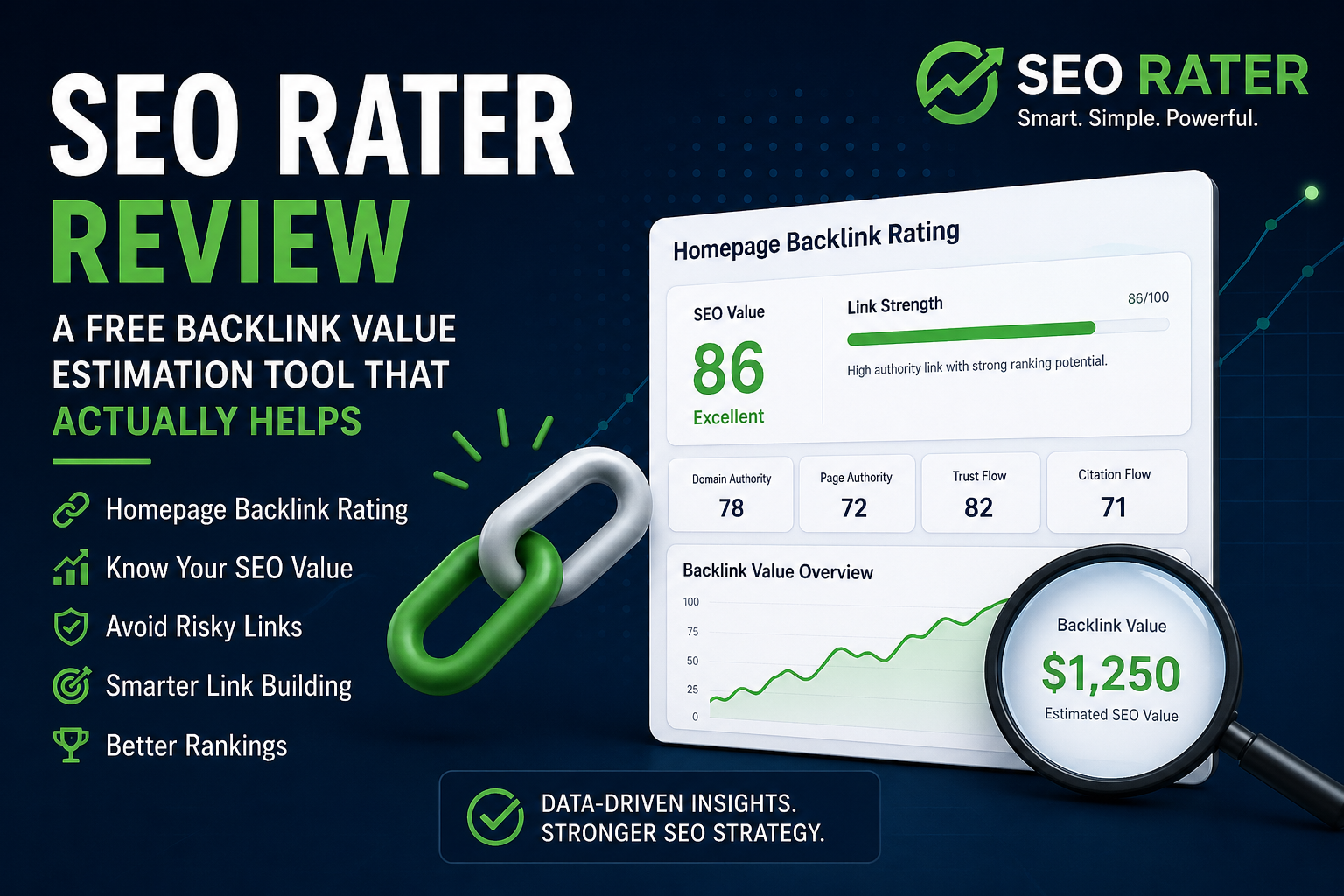
A newly released backlink evaluation platform is beginning to attract attention among SEO professionals looking for clearer ways to measure link value. Instead of relying on scattered metrics or gut feeling, the new approach focuses on aggregating multiple signals into one simplified rating. The idea is straightforward: make it easier to understand whether a homepage backlink is actually worth pursuing before spending time, money, or outreach effort. 📢
Early adopters describe The ultimate SEO tool as refreshingly focused. Rather than trying to be another all-in-one SEO suite, the platform concentrates on a single question — how valuable is a homepage backlink likely to be? This narrow scope makes the workflow faster and surprisingly practical for agencies and site owners who evaluate dozens of opportunities weekly.
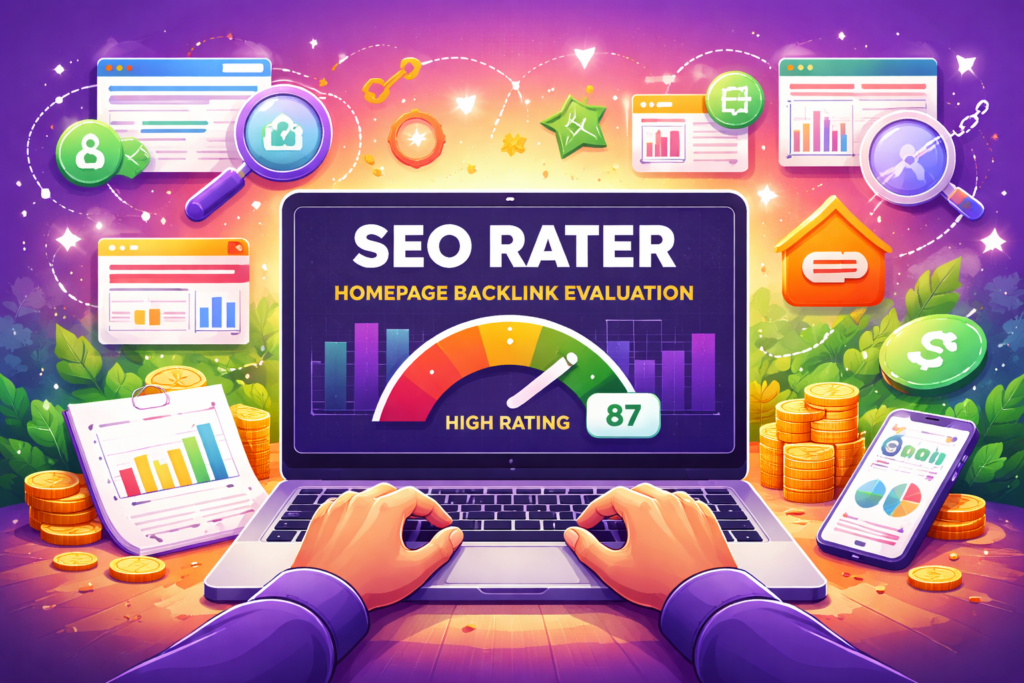
The platform behind the concept, SEO Rater, positions itself as a lightweight decision-making layer rather than a replacement for traditional SEO platforms. The rating system is based on aggregated signals from widely used metrics, producing a comparable score designed to estimate the potential impact of a homepage backlink. The goal is not perfection, but clarity — something many link builders have been missing. 🧭
Why Homepage Backlinks Still Matter More Than Most
Despite constant algorithm changes, homepage backlinks continue to hold unusual weight in SEO strategy. A link placed on a homepage often flows authority through navigation, internal links, and category structures. This means one strong placement can influence an entire domain rather than a single page.
That broad distribution is exactly why homepage links are often expensive and difficult to evaluate. Two sites may appear similar at first glance, yet one may pass significantly more authority due to structure, crawl frequency, and internal linking. Without a consistent evaluation method, marketers are left comparing incomplete signals. 📊
The new rating-based approach attempts to simplify that comparison. Instead of manually analyzing every metric, users receive a consolidated score that reflects overall potential. This doesn’t replace deeper audits but acts as a filter, helping prioritize which opportunities deserve closer attention.
A Shift Away From Metric Overload
SEO professionals often rely on multiple tools simultaneously — checking domain authority, traffic estimates, trust indicators, outbound link counts, and more. The result is a fragmented evaluation process where different tools tell slightly different stories.
This new approach reduces that complexity. By aggregating signals into a single rating, it removes much of the noise that slows decision-making. Users can quickly determine whether a homepage backlink falls into a strong, average, or weak range before committing to outreach. ⚡
This matters particularly for agencies handling multiple campaigns. When evaluating dozens of potential placements, even small time savings add up. Instead of deep-diving into every site, teams can shortlist high-value options first.
Budget Planning Becomes Less Guesswork
Pricing homepage backlinks has always been inconsistent. Some publishers price based on traffic, others on authority metrics, and others on perceived brand value. Without a clear comparison model, marketers often rely on instinct.
A rating-based system introduces more structure into these decisions. If two opportunities carry similar cost but different ratings, the stronger option becomes easier to identify. Over time, this approach encourages smarter budget allocation. 💰
Marketers can also track patterns. If links above a certain rating consistently produce stronger ranking movement, future campaigns can focus on similar opportunities. This creates a feedback loop that gradually improves strategy.
Negotiation Becomes More Balanced
Another benefit of measurable backlink value is negotiation leverage. When discussing placements with site owners, marketers often rely on subjective arguments. A standardized rating provides a more objective reference point.
This doesn’t mean pricing becomes fixed, but discussions become more transparent. Publishers offering stronger homepage placements can justify higher rates, while weaker opportunities may require additional value to remain competitive. 🤝
Over time, this kind of transparency may influence the link marketplace itself. Quality becomes easier to recognize, and inflated pricing becomes harder to justify.
Risk Management in Link Building
Not every homepage backlink is beneficial. Some sites show strong metrics but weak long-term stability. Others rely heavily on outbound links, reducing the authority passed to each placement.
An aggregated rating helps highlight potential inconsistencies. By combining multiple signals, the tool reduces reliance on any single metric. This encourages a more cautious approach to link acquisition. ⚠️
For long-term SEO strategies, this is particularly valuable. Avoiding weak or risky placements helps maintain a cleaner backlink profile.
Performance Tracking Over Time
Consistency is one of the most underrated advantages of rating-based evaluation. When backlinks are measured using the same methodology, comparing results becomes easier.
Marketers can monitor how links within certain rating ranges influence rankings, traffic, or indexing. Over time, this produces actionable insights rather than guesswork. 📈
Agencies may also benefit from improved reporting. Instead of counting links, they can demonstrate improvements in backlink quality.
Competitive Implications
As structured backlink evaluation becomes more common, competition for strong homepage placements may increase. High-quality domains could become more valuable, while weaker ones lose demand.
This shift may push publishers to improve site quality and internal linking. The ecosystem becomes more performance-driven, benefiting both buyers and users. 🚀
Early adopters of rating-based evaluation may gain an advantage. By consistently choosing stronger placements, they gradually build authority faster than competitors relying on random link acquisition.
A Focused Tool With a Clear Purpose
The SEO landscape is crowded with feature-heavy platforms. This new approach stands out by doing less — but doing it deliberately. Instead of offering everything, it focuses on one decision: evaluating homepage backlink value.
That simplicity makes it easy to integrate into existing workflows. Users can keep their preferred SEO tools while adding a clearer decision layer. 🧩
Sometimes, the most useful tools aren’t the most complex ones. They’re the ones that solve a specific problem cleanly.
What This Means for SEO Strategy
The launch of a free homepage backlink rating platform reflects a broader shift toward smarter link building. Instead of collecting links blindly, marketers are increasingly focused on quality and measurable impact.
Understanding backlink value before investing resources improves efficiency, reduces risk, and strengthens long-term results. Even small improvements in link quality can compound over time.
If adoption continues, rating-based backlink evaluation could become a standard step in SEO workflows. And in a competitive environment, clearer decisions often make the biggest difference. 🎯