There’s a strange paradox in modern SEO. Everyone talks about backlinks, everyone knows they matter, and yet very few people truly understand which backlinks deserve their attention. I’ve seen websites spend months chasing hundreds of links from blog posts, directories, and guest posts—while ignoring the rare opportunity to secure a powerful homepage backlink.
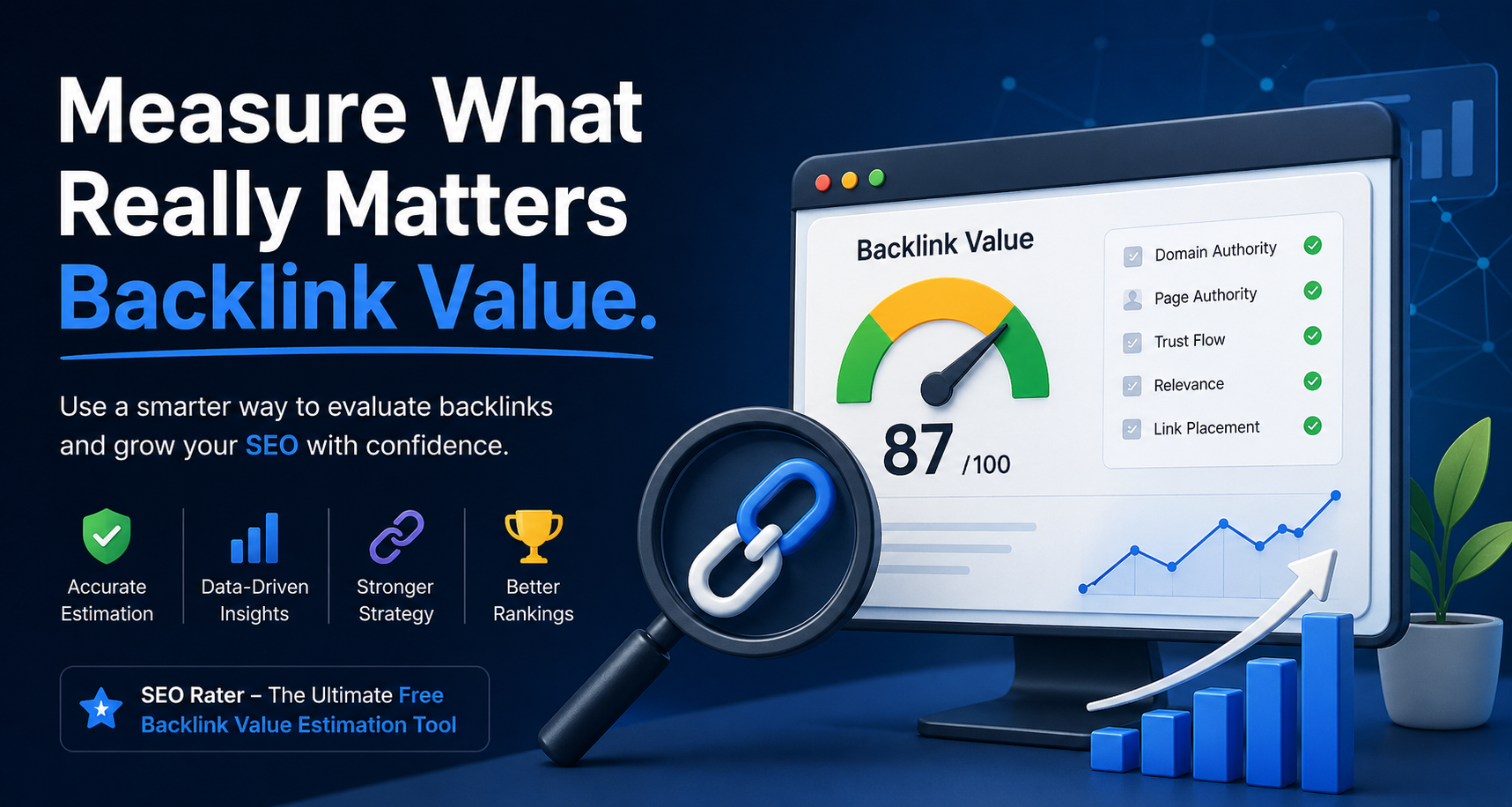
That’s why tools like the Backlink Value Checker have started to change how people approach link building. Instead of guessing whether a link is worth the effort, you can actually measure its potential impact. And once you start doing that, you begin to realize something important: a single homepage backlink can sometimes outperform dozens of ordinary links. 🚀
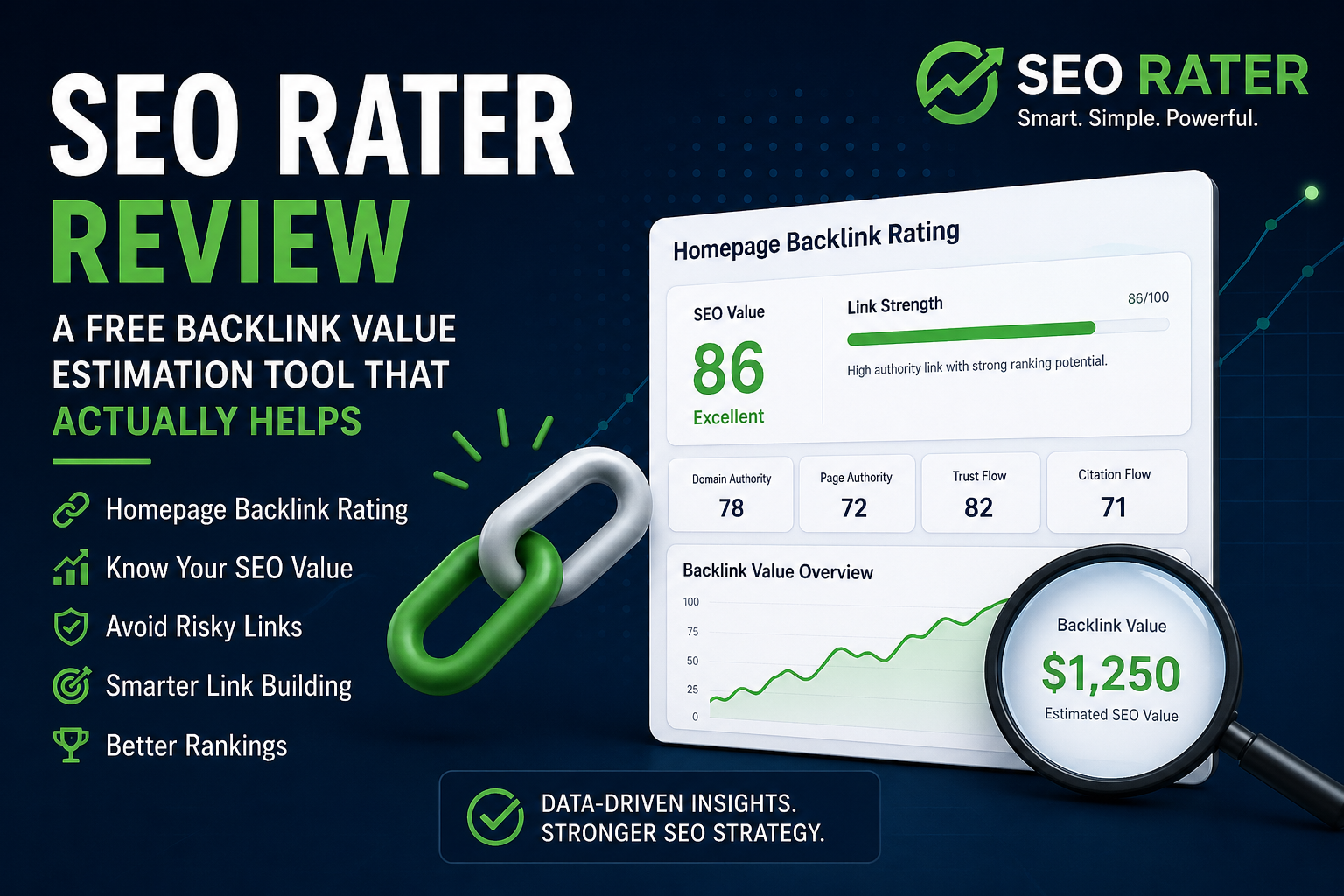
When I first started looking deeper into link valuation, I kept coming back to one tool in particular: SEO Rater. What impressed me wasn’t just the simplicity of the tool—it was the perspective it provides. Instead of treating backlinks as random wins, it encourages you to treat them as strategic assets. And in my opinion, that shift in thinking is exactly what most SEO strategies have been missing.

Why Homepage Backlinks Are a Different Breed
Not all backlinks live in the same ecosystem. Some sit quietly on a random blog page that barely receives traffic. Others appear in sidebars or outdated resource lists that no one clicks anymore. And then there are homepage backlinks—the ones that sit at the center of a site’s authority.
Search engines tend to treat homepage links differently for a simple reason: the homepage is often the most trusted page of a domain. It’s where authority accumulates. It’s where external signals converge. And it’s usually the page that receives the most internal link distribution across the entire website.
In practical terms, that means a homepage backlink can send stronger trust signals across your entire domain, not just a single page. That’s a huge difference from typical guest post links that mostly influence one specific URL.
The problem is that many SEO campaigns still operate on a quantity mindset. More links, more outreach, more placements. But if you stop and think about it, a smarter strategy might involve fewer links—just better ones.
The Problem With Guesswork in Link Building
One of the biggest weaknesses in traditional SEO is that people often operate without reliable context. They evaluate a potential backlink based on instinct or rough metrics like domain authority alone.
But authority by itself doesn’t tell the whole story.
For example, two websites might show similar authority scores, yet their homepage backlinks could produce dramatically different SEO outcomes. One site might have strong internal linking, active traffic, and consistent content updates. The other might be technically strong but practically dormant.
Without deeper analysis, those differences are easy to miss.
This is exactly why evaluating backlinks properly matters. Tools that combine multiple SEO metrics into a clear rating allow you to see the real potential behind a link. Instead of chasing vague opportunities, you start recognizing which links are actually worth negotiating for.
And once you start thinking that way, link building becomes less about volume and more about strategic positioning. 🎯
Why Knowing Backlink Value Changes Everything
Understanding the value of a homepage backlink isn’t just about curiosity—it changes how you plan your entire SEO approach.
When you know what a link is worth, several things become easier.
First, you can prioritize effectively. Instead of spending hours sending outreach emails to dozens of mid-tier sites, you can focus on the handful that truly matter.
Second, you can negotiate from a stronger position. If you know the approximate SEO value of a homepage backlink, you have a solid argument when discussing collaboration, sponsorship, or guest partnerships.
Third, you avoid wasting resources. Link building often involves time, money, or both. Understanding value helps you invest those resources where they actually produce measurable results.
In my opinion, this is where modern SEO strategies are slowly evolving. It’s not about getting links anymore—it’s about understanding the influence behind each link.
The Quiet Advantage of Strategic Backlink Evaluation
There’s another benefit that rarely gets discussed: clarity.
When you evaluate backlinks properly, you stop reacting to SEO trends and start building a consistent strategy.
Instead of constantly chasing the newest tactic or algorithm rumor, you focus on strengthening your site’s authority through well-placed, high-impact links. Over time, that approach tends to produce far more stable rankings.
Another interesting side effect is that it improves how you evaluate partnerships.
Many websites are eager to exchange links or collaborate on content. But without understanding the SEO value involved, those exchanges can easily become one-sided. One site might be giving away far more authority than it receives in return.
Knowing backlink value helps prevent that imbalance. It ensures that collaborations remain mutually beneficial rather than accidentally exploitative. 🤝
Why Homepage Backlinks Often Deliver the Best ROI
If you think about SEO in terms of return on investment, homepage backlinks start looking even more attractive.
Unlike temporary marketing campaigns, a strong backlink can continue influencing rankings for months or even years. That long-term impact makes high-quality links one of the most sustainable SEO investments available.
Homepage backlinks amplify this effect because they often distribute authority across an entire domain.
That means one placement could potentially strengthen multiple pages on your site, improving rankings for several keywords simultaneously.
Compare that with typical guest posts, which usually influence only the specific page being linked. The difference in impact can be substantial.
Of course, this doesn’t mean every homepage link is automatically valuable. The quality of the referring domain still matters enormously. But when you combine strong domains with prominent link placement, the results can be surprisingly powerful.
A Smarter Way to Plan Link Building
One of the biggest lessons I’ve learned from analyzing backlinks is that strategy always beats volume.
You don’t need hundreds of links if a smaller number of carefully chosen ones carry stronger authority signals.
A smarter link-building approach might look something like this:
• Identify high-authority websites relevant to your niche
• Evaluate the potential value of their homepage backlinks
• Focus outreach efforts on the most impactful opportunities
• Monitor how those links influence rankings over time
This kind of targeted strategy tends to produce more predictable SEO results. Instead of hoping that a flood of random backlinks improves rankings, you’re deliberately building authority step by step.
And honestly, that approach feels a lot closer to how search engines themselves evaluate trust.
Why Data-Driven SEO Is Becoming Essential
Search engines are becoming more sophisticated every year. Algorithms now analyze context, relevance, and trust signals in ways that were unimaginable a decade ago.
Because of that, guesswork in SEO is becoming increasingly risky.
Strategies that rely purely on intuition often struggle to keep up with algorithm changes. Data-driven strategies, on the other hand, adapt more easily because they’re based on measurable signals.
That’s another reason why backlink evaluation tools have become so valuable. They turn abstract SEO concepts into something tangible. Instead of wondering whether a link might help your rankings, you can estimate its potential impact and plan accordingly.
In many ways, this represents a shift in how SEO professionals think about optimization. It’s less about tricks and more about informed decision-making. 📊
The Competitive Advantage Most Sites Ignore
Here’s something interesting: many websites still underestimate homepage backlinks.
They chase guest posts, comment links, and quick placements simply because those opportunities are easier to obtain. Homepage links require stronger relationships, better negotiation, and often higher investment.
But that difficulty is exactly what creates the advantage.
Because fewer sites pursue them strategically, the ones that do often gain a noticeable edge in authority and rankings. Over time, that advantage compounds.
It’s a bit like investing in long-term assets instead of chasing short-term wins. The payoff might not be immediate, but it tends to be far more durable.
Final Thoughts: Backlinks Deserve More Respect Than They Get
If there’s one takeaway from all this, it’s that backlinks shouldn’t be treated casually.
They’re not just numbers in an SEO report—they’re signals that shape how search engines interpret your entire website.
Homepage backlinks, in particular, carry influence that many strategies fail to fully appreciate. When evaluated properly and acquired strategically, they can become some of the most valuable assets in your SEO toolkit.
And that’s why tools that help measure backlink value are becoming increasingly important. They remove guesswork, provide clarity, and allow you to approach link building with a level of precision that wasn’t easily possible before.
In the long run, the websites that succeed in search rankings won’t necessarily be the ones with the most backlinks.
They’ll be the ones that understand their value the best. ⭐