There’s a quiet frustration in modern SEO that nobody really talks about. You find a site offering a homepage backlink, the numbers look decent, traffic seems okay, and yet something still feels uncertain. You open five different tools, compare five different scores, and somehow end up more confused than when you started. That’s the moment when you realize how much of link building still relies on interpretation instead of clarity. And honestly, that’s where a focused rating approach starts to feel not just useful — but necessary. 🎯
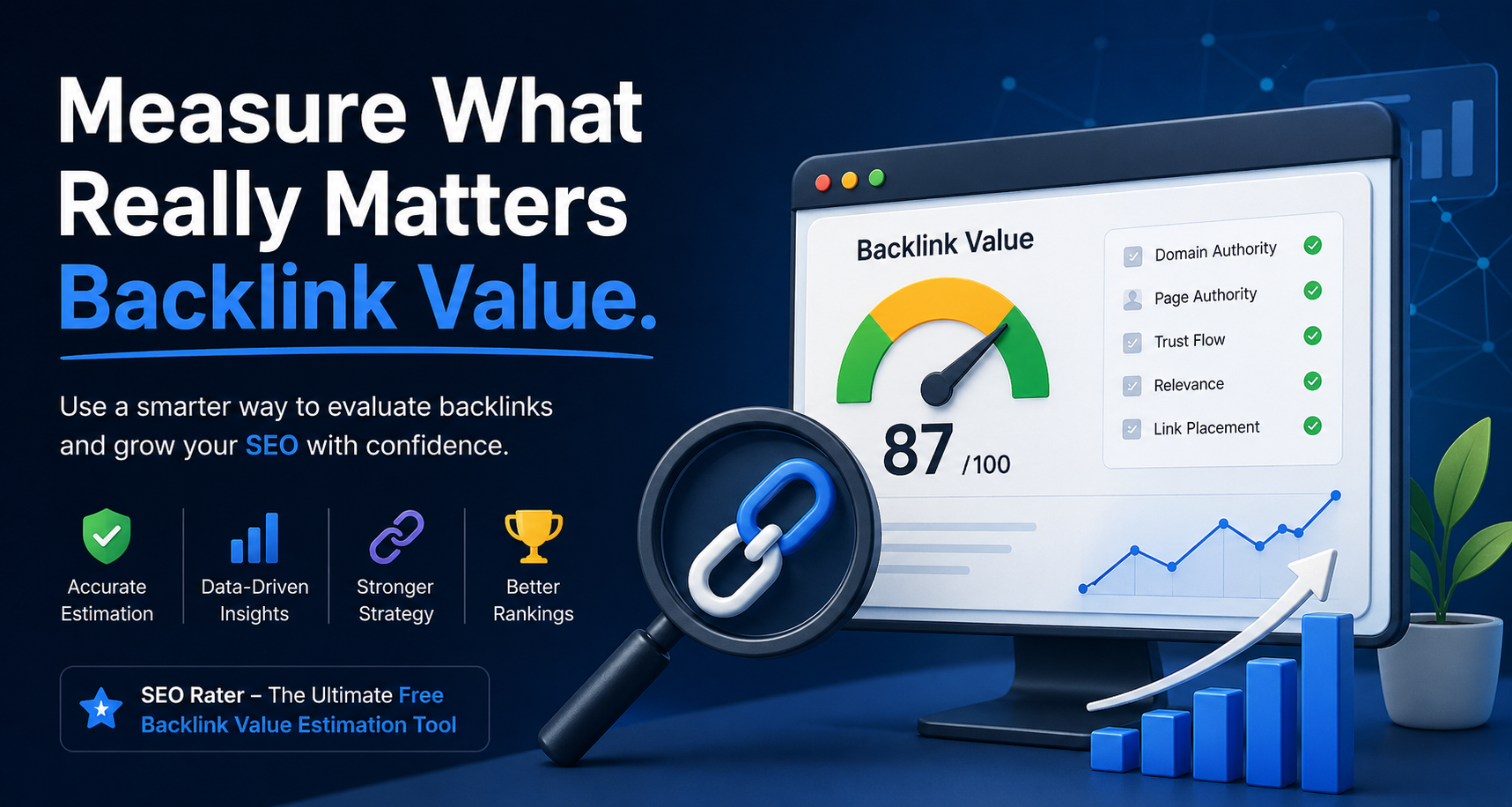
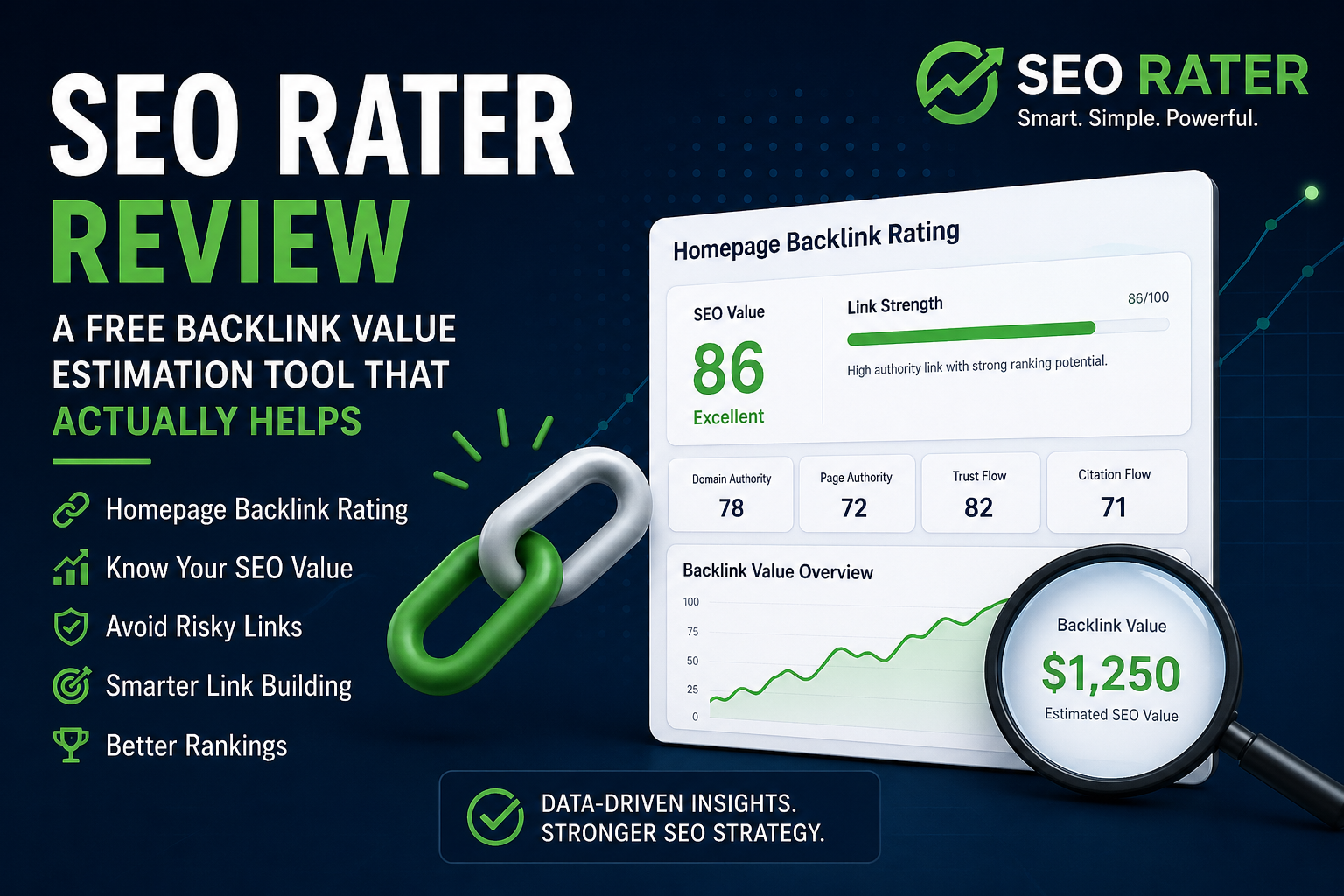
I’ve always believed homepage backlinks deserve more careful evaluation than most SEOs give them. They’re powerful, yes, but they’re also easy to misunderstand. A homepage link can distribute authority across an entire domain, influence multiple pages, and accelerate trust signals faster than deep-page placements. But not every homepage carries the same weight, and that’s exactly why something like the Backlink Rating tool becomes practical. Instead of piecing together scattered metrics, you’re looking at a unified evaluation that reflects the actual potential impact.
What makes this approach more interesting is how naturally it fits into decision-making. When using SEO Rater, the process doesn’t feel like running a complicated audit. It feels more like checking the strength of an opportunity before committing to it. You’re not replacing your SEO toolkit — you’re simply adding a layer of clarity. And that small addition changes the tone of link-building decisions entirely. 🧠
Homepage Backlinks Still Hit Differently
There’s a reason homepage links are still considered premium placements. They sit at the center of a site’s structure, meaning they often pass authority more broadly than links buried deep in content. When a homepage is strong, well-maintained, and internally connected, that link equity spreads across the domain naturally.
But the opposite is also true. A weak homepage — outdated, overloaded, or poorly structured — can dilute the value dramatically. This is where many SEO strategies fall short. They treat homepage links as inherently valuable, without questioning the context. In reality, the difference between two homepage backlinks can be enormous.
A rating-based perspective helps remove that blind assumption. Instead of assuming all homepage links are equal, you start comparing them based on measurable signals. That shift alone makes link building feel less speculative and more strategic. 📊
The Budget Problem Nobody Wants to Admit
Link building is rarely just about quality — it’s about cost versus impact. You might find a homepage backlink that looks good, but is it worth the price? Without a consistent way to measure value, it’s easy to overspend on average opportunities or miss stronger ones.
This is where having a standardized rating becomes surprisingly helpful. You can compare multiple homepage placements and quickly understand which ones justify investment. Instead of relying on seller claims or outdated metrics, you’re looking at aggregated signals that represent overall strength.
That clarity changes how you allocate budget. You stop spreading resources thinly and start prioritizing placements that actually move the needle. Over time, this leads to fewer links — but stronger ones — and that’s usually a better trade. 💰
Negotiations Become Much Easier
If you’ve ever negotiated for a homepage backlink, you know how subjective pricing can be. Some site owners price based on traffic, others on authority, others on perceived niche value. Without a reference point, it’s difficult to push back.
A structured rating gives you that reference. When you know the estimated value of a homepage backlink, you can negotiate with more confidence. You’re not guessing anymore — you’re evaluating. That makes conversations more balanced and less emotional.
It also helps when comparing partnerships. Instead of choosing based on intuition, you’re selecting opportunities based on measurable potential. That subtle change improves long-term outcomes without dramatically changing your workflow. 🤝
Avoiding the Trap of Inflated Metrics
SEO metrics can be misleading. A domain might show strong authority but have weak homepage engagement. Another might display decent traffic but rely heavily on low-quality backlinks. Without context, these signals can push you toward poor decisions.
A combined rating approach helps filter these inconsistencies. By aggregating multiple signals into a single evaluation, you reduce the influence of any one inflated metric. It’s not about replacing detailed analysis — it’s about avoiding obvious traps early.
This becomes especially valuable when reviewing unfamiliar domains. Instead of diving into deep audits immediately, you can quickly determine whether the opportunity deserves attention. That saves time and reduces risk. ⚠️
Tracking What Actually Works
One overlooked advantage of rating-based evaluation is consistency. When you measure homepage backlinks using the same framework, patterns begin to appear. Certain types of sites perform better. Certain authority ranges correlate with ranking improvements.
This transforms link building from guesswork into learning. You start recognizing what works in your niche instead of following generic advice. Over time, your outreach becomes more focused and more efficient.
It also improves reporting. Instead of counting links, you can describe quality trends and expected impact. That’s a stronger narrative for clients, teams, or even your own strategy planning. 📈
Comparing Opportunities Without Overthinking
Most SEO professionals spend too much time comparing metrics across tools. Domain authority here, trust flow there, traffic somewhere else. The result is analysis paralysis.
A unified rating simplifies comparison. When evaluating two homepage backlinks, you can quickly see which one offers stronger potential. That doesn’t eliminate nuance, but it removes unnecessary friction.
This kind of simplicity is underrated. SEO workflows are already complex — reducing cognitive load wherever possible makes a real difference. 🧩
The Competitive Edge Comes From Better Choices
SEO often rewards incremental advantages. Choosing slightly stronger backlinks consistently can lead to noticeable ranking improvements over time. It’s not dramatic, but it compounds.
When you evaluate homepage links carefully, you naturally build a stronger authority profile. Competitors may still chase volume, while you focus on impact. That difference becomes visible gradually — and then suddenly.
It’s not about building hundreds of links. It’s about choosing the right ones. 🚀
A More Structured Way to Plan Link Building
Once you start thinking in terms of backlink value, strategy becomes clearer. You prioritize high-impact homepage links first, then support them with contextual placements. Instead of random outreach, you build a layered authority approach.
This structure makes campaigns more predictable. You understand why you’re pursuing each link and what role it plays. That clarity reduces wasted effort and improves long-term results.
It also encourages patience. Instead of chasing quick wins, you invest in placements that build sustainable authority. That mindset shift is subtle but important. 🧭
Final Thoughts
Homepage backlinks are powerful, but only when chosen carefully. Treating them all as equal is one of the biggest mistakes in link building. A rating-based evaluation helps bring clarity into a process that often relies too heavily on intuition.
The value here isn’t just in the score itself — it’s in the decision-making confidence it provides. You negotiate better, invest smarter, and avoid weak opportunities. Over time, those improvements compound into stronger rankings and more stable SEO performance.
At the end of the day, SEO success isn’t about collecting links. It’s about choosing the ones that actually matter. And when you stop guessing and start evaluating, the entire strategy becomes more intentional — and far more effective. 🎯