There’s a moment every SEO professional hits sooner or later — you’re staring at a potential backlink opportunity, the price looks reasonable, the site “seems” solid, and yet you still have no real idea whether the link is actually worth it. Metrics are scattered, tools disagree, and gut feeling isn’t a strategy. That’s exactly the gap this review explores: a tool built to answer a simple but critical question — how valuable is this backlink, really? 🔍
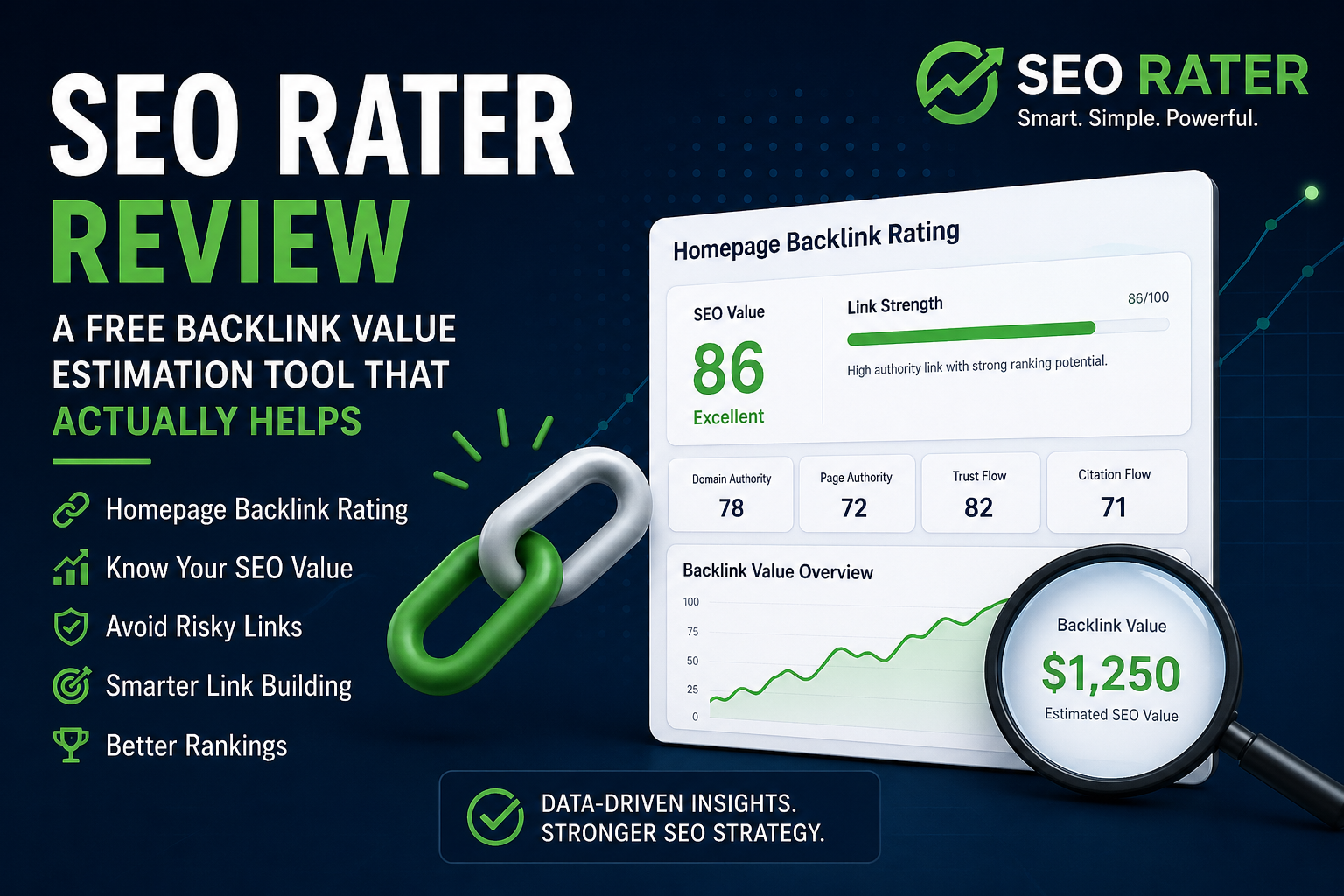
This is where SEO Rater steps in with a surprisingly practical approach. Instead of forcing you to jump between multiple platforms, compare mismatched scores, and interpret vague authority signals, it offers a consolidated rating focused on what matters most — the potential SEO value of a backlink. It’s not trying to replace your entire workflow; it’s trying to give you clarity at the exact moment you need to make a decision. And honestly, that narrow focus is what makes it useful.
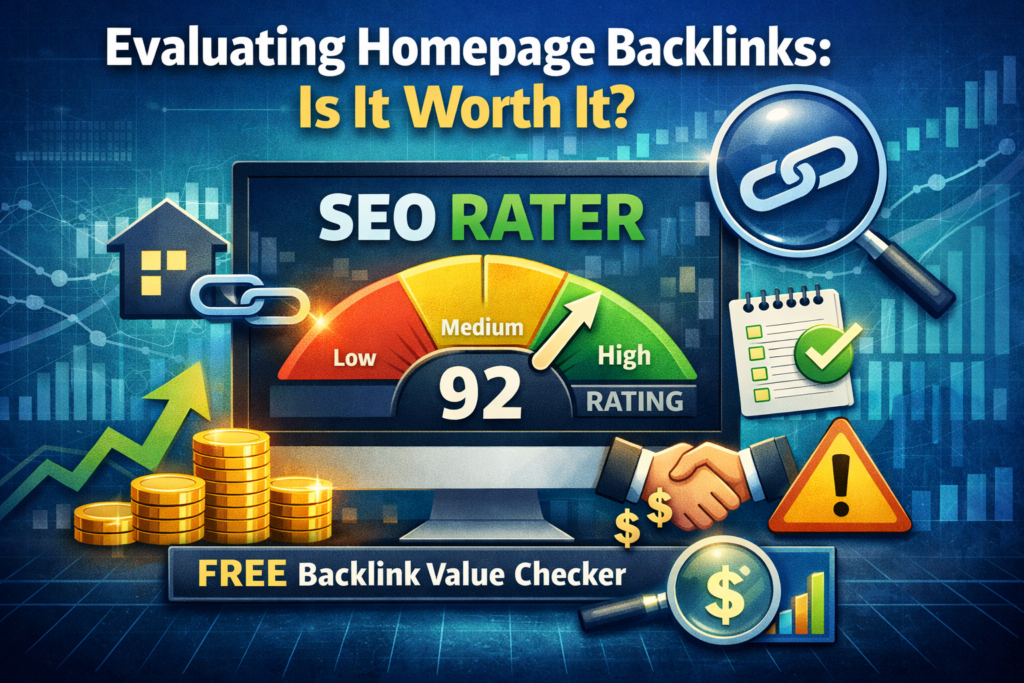
One of the most helpful parts of the platform is the Backlink Value Checker, which focuses specifically on estimating the strength and impact of a link before you invest time or money. It doesn’t overcomplicate the process — you evaluate the page, review the combined rating, and quickly understand whether the opportunity deserves attention. It feels less like running a full audit and more like getting a second opinion from someone who already did the homework. 📊
Why Homepage Backlinks Still Carry Serious Weight
Homepage backlinks have always been treated differently, and for good reason. They sit at the center of a website’s internal structure, meaning they often distribute authority across the entire domain. When you secure a link from a homepage, you’re not just targeting a single URL — you’re tapping into the site’s overall authority footprint. That’s why these links tend to influence rankings beyond one page. 🧭
But the problem is obvious: not every homepage is equal. A link from a neglected homepage with weak internal structure doesn’t perform the same as one from an actively maintained, authoritative domain. Without context, homepage backlinks can be overpriced, undervalued, or simply misunderstood. This is where a rating-based evaluation starts to make more sense than relying on a single metric.
The tool’s homepage backlink rating concept focuses on aggregating multiple signals into one understandable score. Instead of manually comparing domain authority, traffic, link profile, and trust indicators, you get a synthesized value that reflects overall potential. It’s not magic — it’s structured aggregation — but it saves time and reduces decision fatigue. ⚖️
Making Smarter Decisions About Link Investment
Link building often becomes a budgeting problem. You don’t just ask “Is this link good?” — you ask “Is this link worth the cost?” The difference matters. A moderately strong backlink might be useful, but not at premium pricing. On the other hand, a high-value homepage placement might be worth stretching the budget.
Having a consistent rating helps bring logic into that decision. Instead of negotiating blindly, you can compare opportunities on a similar scale. That changes the conversation. You’re no longer reacting to a seller’s claims — you’re evaluating based on measurable potential. 💡
It also helps prioritize outreach. When you identify which sites offer stronger homepage value, you can focus efforts where impact is likely to be higher. That’s a subtle shift, but over time it compounds. Fewer low-impact links, more strategic placements, and a cleaner backlink profile overall.
Negotiation Leverage You Can Actually Use
Anyone who has negotiated link placements knows how subjective pricing can be. One site charges $50, another charges $500, and both claim to be “high authority.” Without a consistent evaluation method, you’re guessing. A backlink rating introduces structure into those negotiations.
When you understand the relative value of a homepage link, you gain leverage. You can justify counteroffers, request additional placement visibility, or even decide to walk away. That’s powerful because it removes emotional decision-making. Instead of chasing every opportunity, you selectively invest in the ones that make sense. 🤝
This becomes even more useful when managing multiple partnerships. Comparing potential placements side-by-side creates a clearer picture of ROI. Over time, patterns emerge — certain types of sites consistently deliver stronger value. That insight alone can reshape your outreach strategy.
Avoiding Risky or Overhyped Backlinks
Not every homepage backlink is beneficial. Some come from networks with questionable link practices, outdated domains, or inflated metrics. These can create more harm than benefit, especially if search engines interpret them as manipulative.
A structured rating system helps identify these weaker opportunities early. When a site’s aggregated score doesn’t align with its asking price or claims, it’s a signal to look deeper. That doesn’t automatically mean the link is bad — but it does encourage smarter scrutiny. ⚠️
This kind of risk management is often overlooked. Many link-building campaigns focus purely on acquiring links, not evaluating long-term impact. By filtering opportunities through a value-based lens, you naturally avoid weaker placements and build a healthier profile.
Tracking Performance Over Time
One underrated benefit of rating-based evaluation is consistency. When you use the same scoring approach across multiple backlinks, you can track patterns over time. Which types of homepage links correlate with ranking improvements? Which ones underperform?
This transforms link building from a reactive activity into a measurable strategy. You start to recognize which domains, niches, or authority ranges deliver real results. Over time, that feedback loop sharpens your decisions. 📈
It also helps when reporting performance. Instead of saying “we built X links,” you can describe the overall quality and expected impact. That’s a much stronger narrative, especially for clients or stakeholders who care about outcomes rather than volume.
A Simpler Way to Compare Opportunities
One of the most practical aspects of the tool is how it simplifies comparison. Normally, evaluating two potential backlinks requires checking multiple tools, exporting metrics, and interpreting conflicting scores. It’s slow and inconsistent.
With a unified rating, you can compare quickly. Site A scores higher than Site B — the decision becomes clearer. Of course, context still matters, but the baseline comparison saves time. And in SEO, time spent evaluating opportunities adds up quickly. ⏱️
This simplicity doesn’t remove nuance — it reduces noise. You still analyze relevance, placement context, and content alignment, but you’re not overwhelmed by fragmented data.
Competitive Advantage Through Better Link Selection
SEO is often about marginal gains. The difference between ranking positions can come down to a handful of stronger backlinks. If you consistently choose higher-value homepage placements, you gradually build an advantage.
This is where structured evaluation becomes strategic. While competitors chase volume or follow outdated metrics, you focus on link equity and actual impact. Over time, that difference compounds into stronger authority and more stable rankings. 🚀
It’s not about building more links — it’s about building smarter ones.
Planning Your SEO Strategy Around Link Value
A rating-based approach naturally influences planning. Instead of randomly pursuing outreach, you build a roadmap. Target higher-value homepage opportunities first, fill gaps with mid-tier placements, and avoid low-impact links entirely.
This structured approach helps allocate resources more efficiently. Budget, outreach time, and content efforts all align around potential impact. That’s the kind of strategic clarity many SEO workflows lack.
And because the rating is based on aggregated signals, you’re not relying on a single metric that might fluctuate or mislead. You’re working with a broader perspective. 🧠
Final Thoughts
There’s no shortage of SEO tools, but not all of them solve real problems. This one focuses on a specific pain point — understanding backlink value — and does it in a straightforward way. It doesn’t promise instant rankings or replace your workflow. Instead, it helps you make better decisions at the moment they matter most.
If your link-building strategy involves homepage placements, partnerships, or paid opportunities, having a consistent way to evaluate value is extremely useful. It removes guesswork, improves negotiation, and helps you prioritize smarter.
In the end, SEO success often comes down to decisions — which links to pursue, which to skip, and where to invest. A clear backlink value estimation tool won’t do the work for you, but it will help ensure the work you do actually moves the needle. 🎯