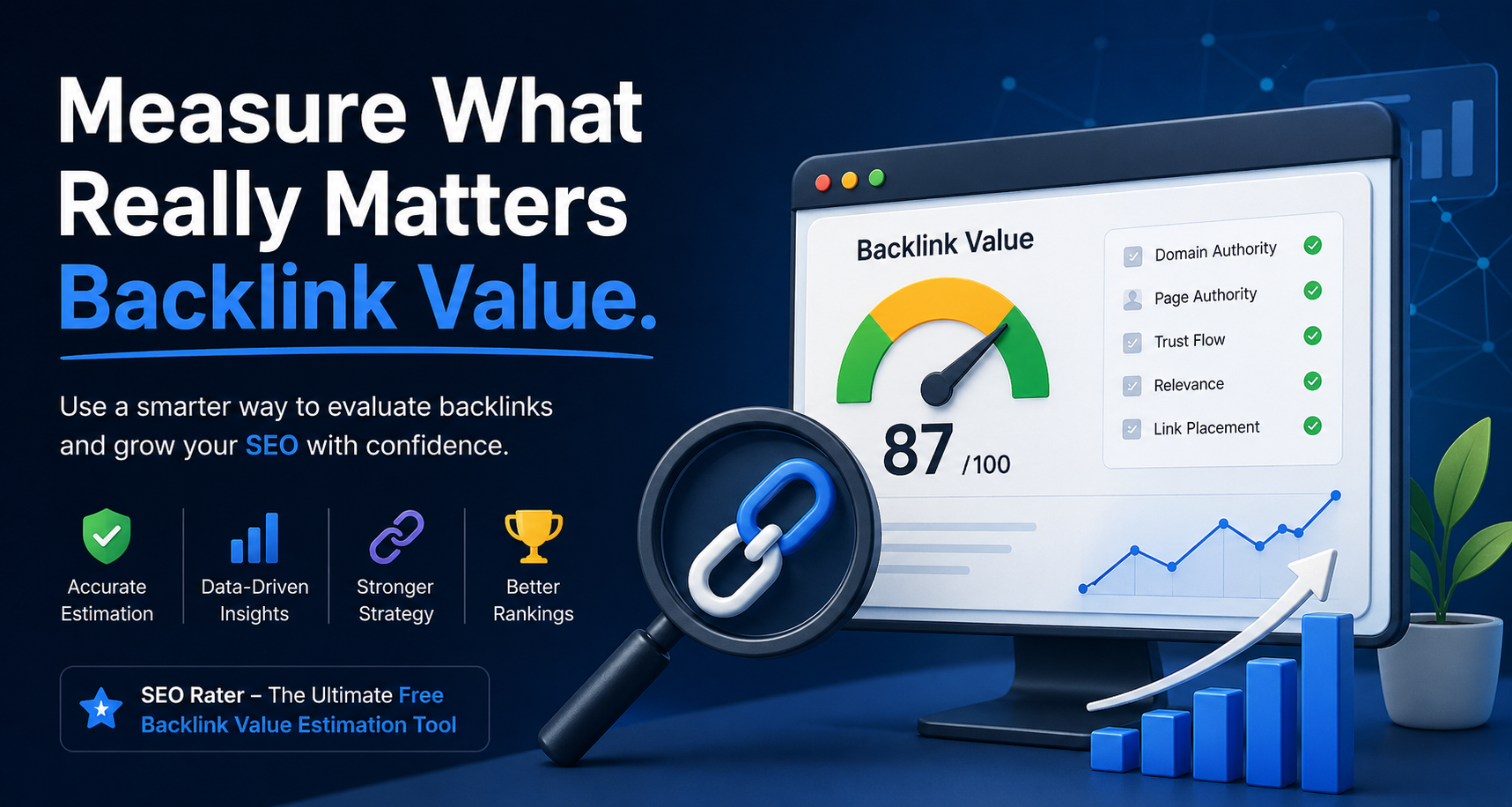
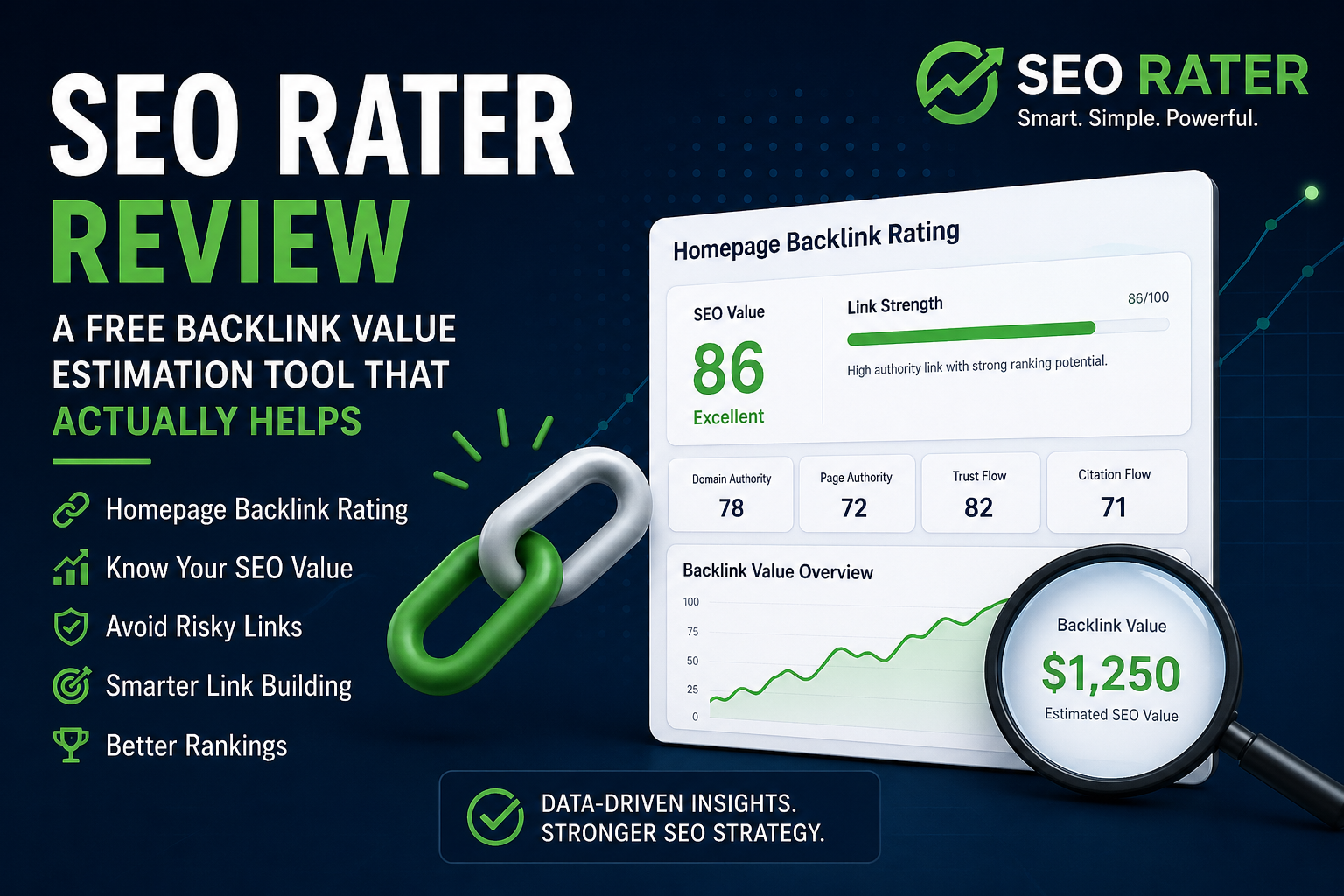
There’s a moment every SEO person hits—usually late at night, staring at spreadsheets—when you realize you’ve been making decisions based on… vibes 😅 Not data, not clarity, just assumptions about which backlinks “feel” valuable. That’s exactly where something like The ultimate SEO tool steps in, and honestly, it feels less like another tool and more like a reality check.
I’ve spent enough time in SEO to know that backlink conversations are often full of confidence but low on precision. Everyone talks about authority, trust, and value—but when you actually ask, “How much is this link worth?” the answers get vague fast. That’s where SEO Rater starts to feel surprisingly refreshing, because it tries to do something most tools avoid: simplify the chaos without dumbing it down.
The Problem Nobody Likes to Admit
Let’s be honest—most link-building strategies are messy behind the scenes 🤷♂️ You might have a list of domains, some metrics from different tools, maybe even a gut feeling about which links are “good.” But translating that into actual value? That’s where things fall apart.
Homepage backlinks, in particular, are treated like premium real estate—and for good reason. They carry more weight, more visibility, and often more risk. But here’s the catch: not every homepage link is a goldmine. Some are overpriced. Some are irrelevant. Some are quietly toxic.
The uncomfortable truth is that without a clear way to evaluate them, you’re essentially making expensive guesses.
What Makes Homepage Backlinks So Hyped?
There’s a reason people chase homepage links like they’re rare collectibles 💡 They sit at the top of a domain’s hierarchy, meaning they tend to pass stronger link equity. In theory, one good homepage backlink can outperform multiple links buried deep in subpages.
But the industry has turned that into a blanket assumption: homepage = valuable. And that’s just not always true.
A homepage on a weak, spammy, or irrelevant site won’t magically boost your rankings. In fact, it can do the opposite. The value isn’t just in the placement—it’s in the context, authority, and overall health of the site.
That’s where a structured rating system actually matters.
Why I Like the Idea Behind SEO Rater
What stands out to me isn’t just that SEO Rater gives you a score—it’s how it approaches the problem 🧠 Instead of relying on a single metric, it combines signals from multiple established SEO indicators and translates them into something you can actually use.
That might sound simple, but it’s surprisingly rare.
Most tools overwhelm you with numbers: DA, DR, traffic estimates, spam scores… and then leave you to connect the dots. SEO Rater flips that by doing the heavy lifting and presenting a unified rating that feels actionable.
And that’s the key word here—actionable.
Because data without direction is just noise.
The Hidden Advantage: Decision-Making Speed
One thing people underestimate in SEO is how much time gets wasted on indecision ⏳ Should you buy that link? Is that partnership worth it? Are you overpaying?
When you have a clear rating system, those decisions get faster. Not perfect—but faster and more grounded.
Instead of analyzing five different tools and second-guessing yourself, you get a consolidated view that helps you move forward with confidence. And in a field where timing matters, that’s a serious advantage.
Not All Links Deserve Your Budget
Let’s talk about money for a second 💸 Because link-building isn’t cheap, especially when homepage placements are involved.
Without a reliable way to evaluate value, it’s incredibly easy to overspend. You might pay premium prices for links that don’t deliver—or worse, that hurt your site long-term.
SEO Rater helps shift that mindset from “Is this expensive?” to “Is this worth it?”
That’s a much better question.
Because sometimes the best decision isn’t chasing the most powerful-looking link—it’s avoiding the wrong one.
Negotiation Just Got More Interesting
Here’s something I didn’t expect: having a backlink rating actually changes how you negotiate 🤝
When you can point to a clear value metric, conversations with site owners become more grounded. You’re not just throwing numbers around—you’re backing them up.
That can lead to better deals, more transparency, and fewer awkward “trust me, it’s worth it” moments.
And honestly, anything that reduces guesswork in SEO partnerships is a win.
Risk Isn’t Always Obvious
One of the biggest traps in link-building is thinking that risk is obvious ⚠️ It’s not.
A site might look decent on the surface—clean design, decent traffic—but still carry hidden issues that could impact your SEO. Maybe it’s part of a link network. Maybe it has inconsistent authority signals. Maybe it’s just not as strong as it appears.
Having a tool that evaluates backlinks from multiple angles helps surface those risks before they become problems.
And that’s something a lot of people only learn the hard way.
Tracking What Actually Works
There’s another benefit that doesn’t get talked about enough: learning from your own results 📊
When you start tracking backlink value over time, patterns begin to emerge. You see which types of links actually move the needle and which ones don’t.
That feedback loop is incredibly valuable.
Instead of repeating the same strategies blindly, you refine them. You double down on what works and cut what doesn’t. Over time, your link-building becomes more efficient—and more predictable.
A Competitive Edge That’s Hard to Fake
SEO is competitive by nature, and small advantages add up 🧩
If your competitors are still guessing while you’re working with clearer data, you’re already ahead. Not because you have better links—but because you’re making better decisions about them.
And in SEO, decision quality often matters more than sheer volume.
That’s what makes tools like SEO Rater interesting. They don’t promise magic results. They just help you see things more clearly.
My Honest Take
I’ll be straight with you—no tool is perfect, and SEO Rater isn’t some miracle solution 🚀 But that’s not the point.
What it does well is bring structure to a part of SEO that’s often chaotic. It takes something abstract—backlink value—and makes it tangible.
And sometimes, that’s exactly what you need.
Not another metric. Not another dashboard. Just a clearer way to understand what you’re already doing.
Final Thoughts: Less Guessing, More Strategy
If there’s one thing I’ve learned, it’s that SEO rewards clarity 🧭 The more you understand the value behind your actions, the better your results tend to be.
Backlinks will always be a core part of SEO, but how you evaluate them makes all the difference.
SEO Rater doesn’t reinvent the game—but it does make it easier to play intelligently.
And honestly, in a space full of noise, that’s more valuable than it sounds.